October 1, 2026
Scaling Green Skills in Africa: From TVET Pilots to Systemic Transformation
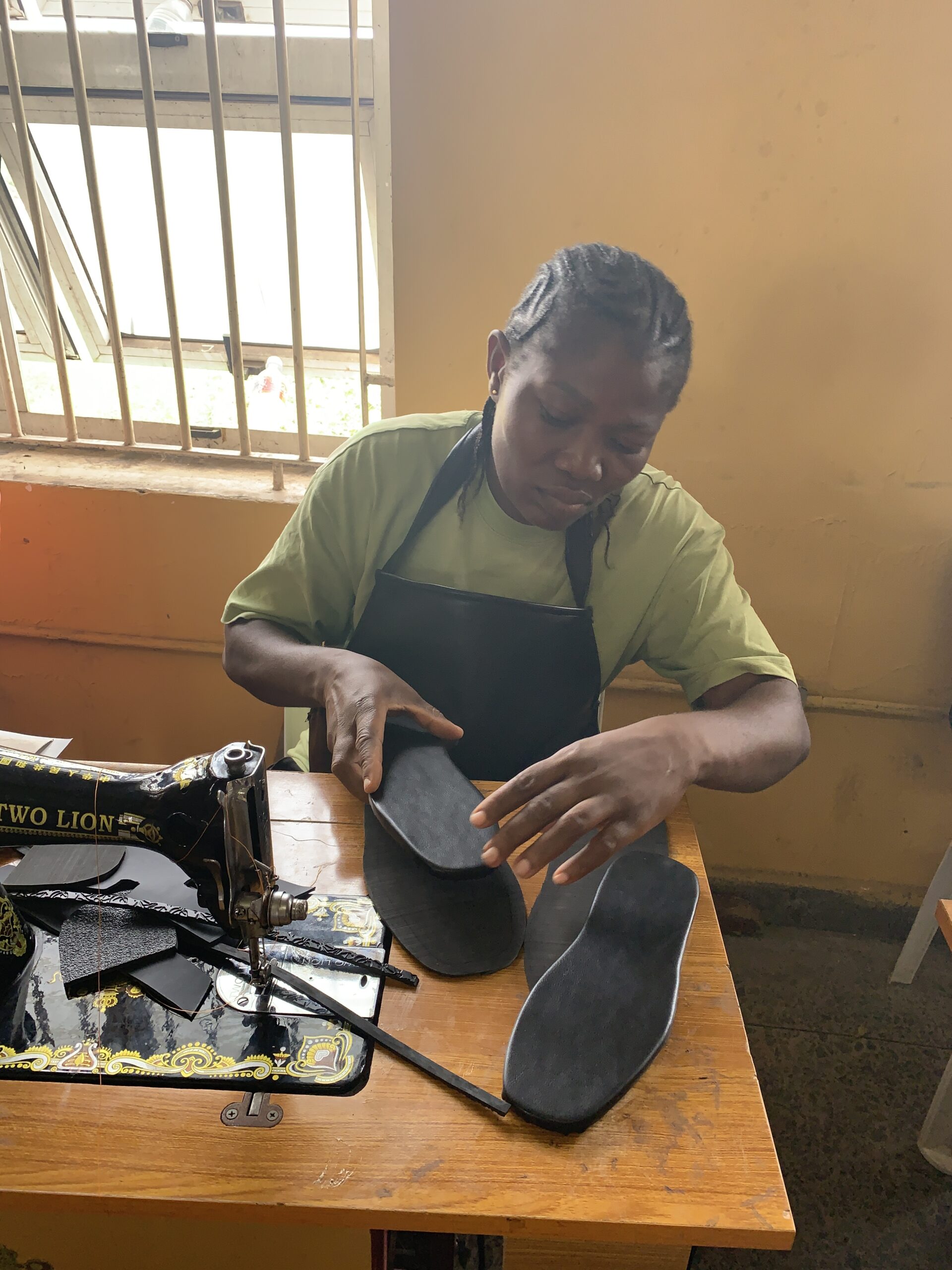
Today, under the franchise business model in the Youth Employability Booster programme, she has developed a range of practical skills, including pattern drafting, filing, cutting, and sewing leather. Through the training, Blessing has also learned how to work with different materials, including synthetic leather, macro, Nora, and fibre, to produce pumps, slippers, sandals, and other types of footwear. She is currently learning bag making, further expanding the range of products she can create.
While the practical nature of the training can sometimes be demanding, Blessing describes the experience as interesting, enjoyable, and rewarding. With the guidance and support of her trainer, she has continued to build her confidence and improve her skills. More importantly, Blessing has already started turning her newly acquired skills into an opportunity to earn an income. She has made sandals for her children and husband, pump slippers for herself, and footwear for other people.
After completing the training, Blessing plans to establish her own shoemaking and bag-making business. Beyond becoming self-employed, she hopes to eventually train others, passing on the skills she has acquired and creating opportunities for more people.
Blessing expressed her appreciation to Mastercard Foundation and Young Africa Nigeria for providing her with the opportunity to acquire practical, income-generating skills and take meaningful steps towards self-employment. She also acknowledged Edo Shoe Manufacturing Company for its contribution to her training experience.
Blessing’s journey demonstrates how access to practical vocational skills can open pathways to income generation, entrepreneurship, and the opportunity to empower others.