October 1, 2026
Scaling Green Skills in Africa: From TVET Pilots to Systemic Transformation
For more than 25 years, Young Africa has rooted its work in the realities of local economies, supporting enterprise development and skills training that respond to community needs. At the heart of its approach is a belief that sustainable development depends on building local capacity rather than long-term dependence on external systems. The organisation’s broader goal is to strengthen the social, economic, and educational resilience of young people, who make up nearly 60% of Africa’s population under the age of 25.
In a conversation with Mahara Goteka, Head of Programmes at Young Africa International, we reflected on the opportunities and challenges facing young people across the continent. While many possess immense talent and entrepreneurial potential, access to relevant skills and economic opportunities remains uneven. Working across several African countries, Goteka has witnessed firsthand how local realities shape development outcomes. His experience offers insight into a scalable franchise model that balances growth with responsiveness to community needs.
‘Our training centres are more than just classrooms; they are localised economies,’ he says.
‘By producing goods and services, creating local employment, and generating revenue that is reinvested into our operations, we have built a self-sustaining model. These enterprises ensure that our programmes can continue to thrive and serve the community, regardless of external funding.’ Towards the end of 2025, the International Labour Organization (ILO) called for urgent investment in decent work to accelerate progress towards Sustainable Development Goal 8, which promotes decent work and economic growth.
The need is particularly acute for women and young people, who continue to face significant barriers to economic participation. Across the continent, millions remain excluded from meaningful opportunities despite the vibrancy of informal economies. Against this backdrop, models that connect skills development to local economic realities are attracting increasing attention. Young Africa’s approach is one example, turning local markets into training grounds for work, enterprise, and income generation. The idea sits within a broader shift taking place across the development sector. Increasingly, policymakers and practitioners are questioning whether lasting change can be achieved through externally designed solutions alone.
Localisation has emerged as a response to this challenge, arguing that communities are often best placed to identify their own opportunities, priorities, and pathways to development. The growing emphasis on localisation reflects lessons learned across decades of development practice. While external funding and expertise have contributed to important progress, many interventions have struggled to achieve lasting impact once projects end. Critics argue that programmes designed without sufficient understanding of local realities often fail to respond to community priorities, build local ownership, or create sustainable systems that continue beyond donor support. As a result, increasing attention is being placed on approaches that place local actors, knowledge, and institutions at the centre of development efforts.
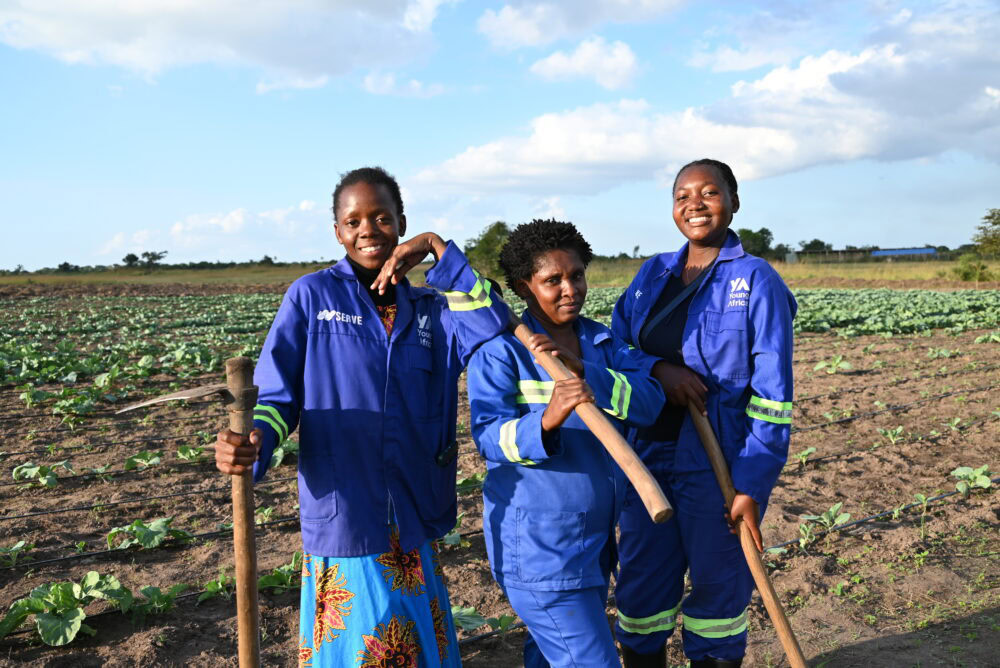
Localisation is increasingly moving from a theoretical goal to a practical economic strategy across Africa. Whether through procurement, skills development, or industrial policy, it offers a way to address persistent challenges such as youth unemployment and informality. The International Labour Organization (ILO) has similarly emphasised the importance of inclusive skills systems and lifelong learning approaches rooted in social dialogue and locally driven solutions. For localisation advocates, the goal is not simply to create jobs but to ensure that economic opportunities are rooted in local realities. This requires training systems that can adapt to different markets, cultures, and livelihoods rather than relying on one-size-fits-all solutions.
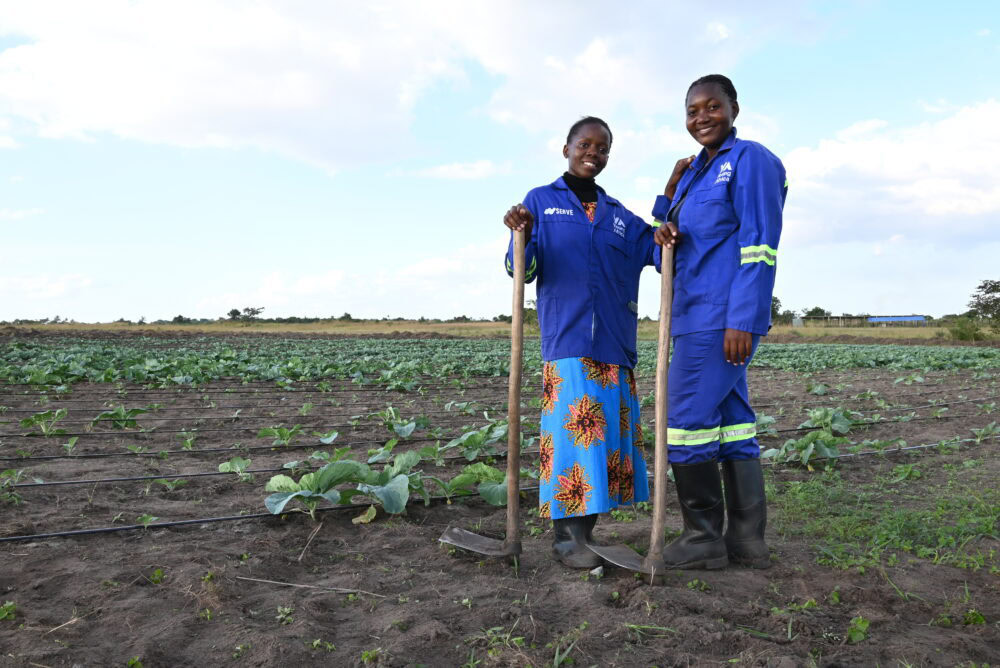
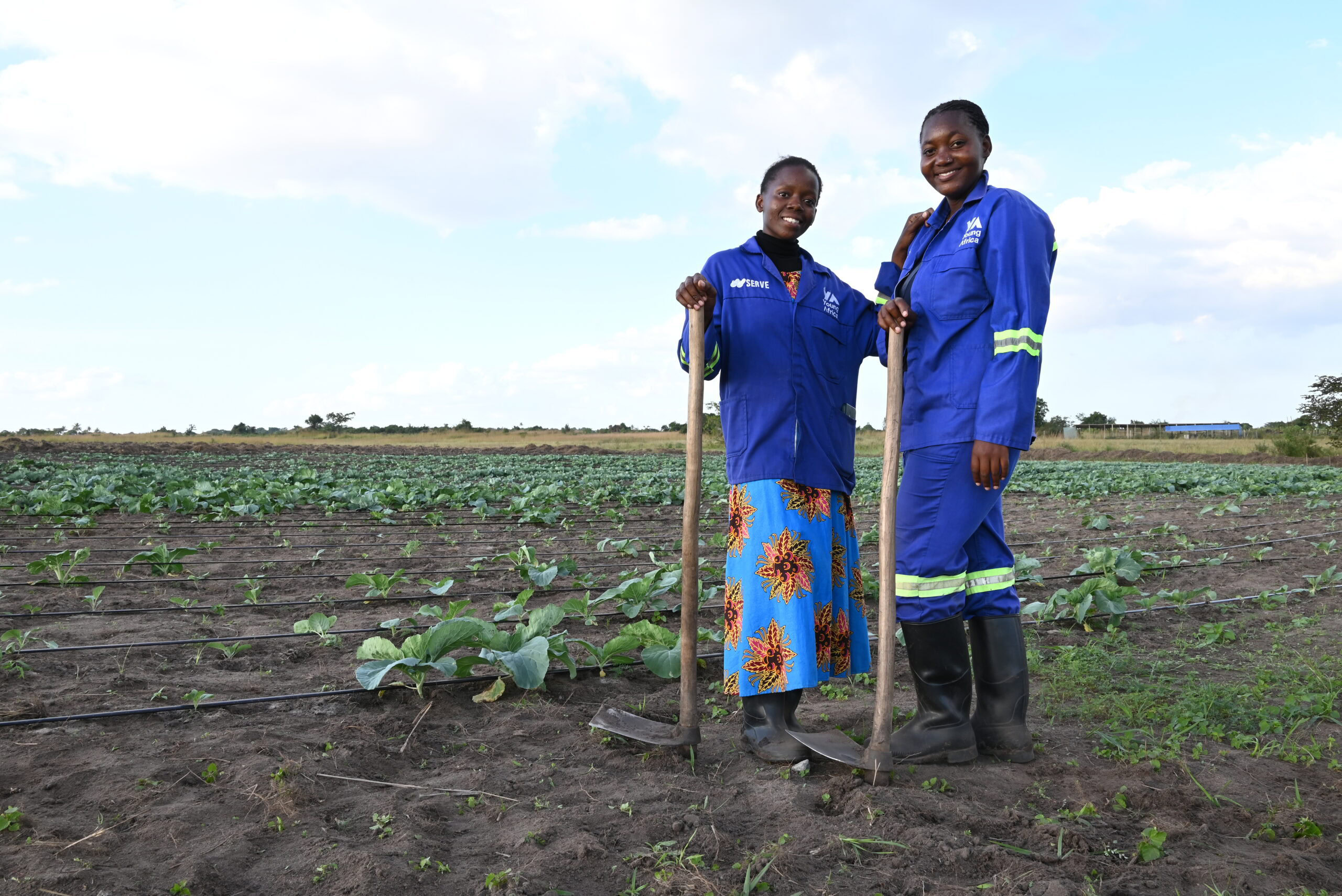
Young Africa has reached more than 390,000 people across its areas of operation, with 70% of graduates in 2025 remaining economically active. The effectiveness of its Technical and Vocational Education and Training (TVET) model is closely linked to the informal economy. This is particularly in sectors such as automotive services, hospitality, agriculture, beauty and cosmetology, engineering, plumbing, and construction. Courses are adapted to different countries and regions to reflect local economic realities and entrepreneurial opportunities. ‘A classic example is Mbire District in northern Zimbabwe,’ Goteka explains. ‘It had no industries or established businesses. It would have been impossible to train 60 welders or 50 carpenters in that area. ‘We could not find a single local artisan working in these sectors, so we identified an opportunity within the community in small livestock farming. We developed a curriculum and partnered with the Ministry of Agriculture to train young people how to rear goats, produce goat feed, sell the goats, and generate income from the activity.’
The Mbire experience illustrates a core principle of localisation: effective interventions begin with local realities rather than predetermined solutions. Instead of adapting the community to fit a programme, the programme was adapted to fit the community. Before designing courses, Young Africa conducts rapid market and youth needs assessments to understand local economic dynamics and identify viable opportunities within each community. This helps ensure that programme design is grounded in local realities rather than external assumptions. This process reflects a broader lesson from development practice. Programmes are often more effective when they are built around existing economic activity, social structures, and local knowledge rather than assumptions about what communities need.
‘Our training centres are not just classrooms; they are industrial hubs,’ Goteka says.
Through its Franchise Business Model, Young Africa establishes centres as both training and production units, creating spaces where learning takes place alongside real economic activity. Goods and services produced within the centres are sold to local markets, helping connect training directly to community needs.
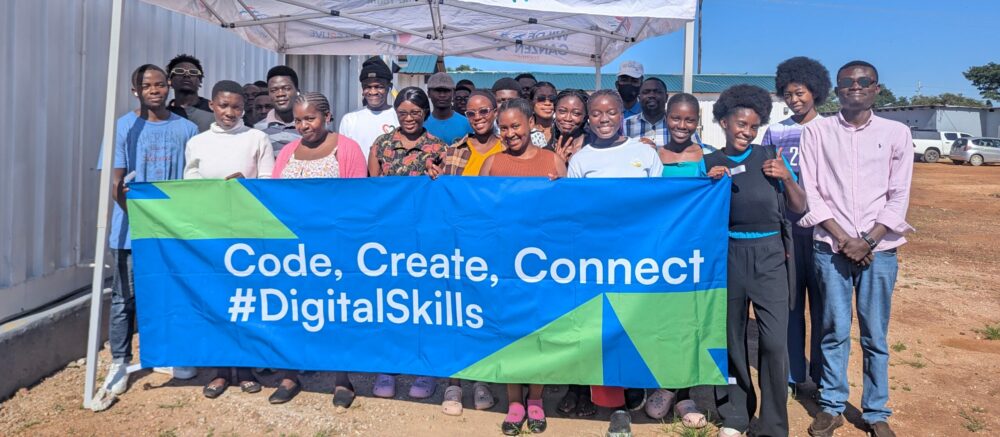
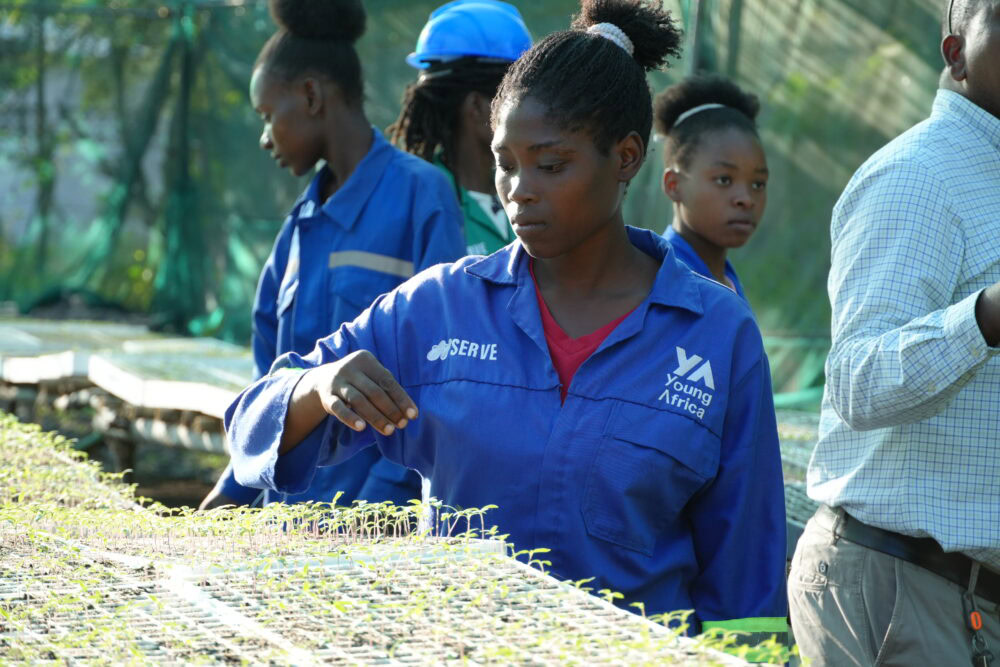
The franchise business model represents a shift from traditional classroom-based vocational training towards a market-led learning ecosystem. By connecting real businesses directly to the training environment, Young Africa seeks to bridge the gap between education and economic reality. To ground the model in local contexts, Young Africa partners with entrepreneurs who operate production units serving surrounding markets. Within these settings, young people gain practical experience while contributing to real economic activity.
‘We devised a model that allows young people to learn on the job, a practical classroom transformed into an industrial hub. In this approach, they learn much faster than in a conventional training programme. We strive to see youth who are employable in blue-collar jobs and ready to transition into work, while also developing entrepreneurial capabilities,’ Goteka explains.
The entrepreneur plays a central role in the model, serving as a trainer, mentor, employer, and role model. By working alongside established businesses, young people gain exposure to the realities of running an enterprise, producing goods and services, and responding to local market demands. As a practical business model, entrepreneurs operating within the centres contribute through rent and service fees, helping to cover shared costs such as security, water, and electricity. According to Goteka, a typical Young Africa centre hosts between 10 and 15 independently run businesses. For many development practitioners, one of the biggest challenges is sustaining impact after project funding ends. By embedding training within local enterprise ecosystems, Young Africa seeks to reduce dependence on external support while strengthening local ownership of economic activity.
Young Africa’s vocational training is also heavily practice-oriented, with approximately 70% focused on hands-on learning and 30% on theory. Through both the Franchise Business Model and the Industry-Attached Model, the organisation works closely with local entrepreneurs and businesses to ensure training remains connected to the realities of local economies. Young Africa’s Business Development Officers play an important role in strengthening local economic participation. While the informal sector is rich with entrepreneurial potential, many young people and small business owners remain disconnected from formal economic systems. Through a combination of practical and structural interventions, the organisation helps bridge this gap.
This support includes financial inclusion initiatives such as bank account registration, business formalisation, financial literacy training, and intensive boot camps designed to strengthen long-term financial management skills. The approach recognises that sustainable livelihoods require more than technical skills alone. Alongside vocational training, young people receive entrepreneurship support, life skills education, financial literacy, peer coaching, wellness services, and sexual and reproductive health and rights (SRHR) education. These interventions seek to address some of the broader barriers that can limit economic participation and long-term resilience.
Localisation also requires adapting to changing realities. As economies become increasingly digital, development organisations are exploring new ways of extending access to skills and opportunities beyond physical training centres. ‘The launch of the new e-learning platform proves that vocational training can be accessed from anywhere,’ Goteka says. The platform offers fifteen specialised online courses, enabling students to access vocational and soft-skills training remotely.
Complementing this effort is the Control+A project in Zambia, which focuses on market-relevant digital skills such as coding and graphic design, helping young people participate in an increasingly digital economy. The broader significance of localisation extends beyond individual training centres. Across Africa, governments, development organisations, and communities are increasingly seeking models that generate lasting economic opportunities while remaining responsive to local realities. The question is no longer simply how to deliver programmes, but how to ensure communities play a leading role in shaping and sustaining them.
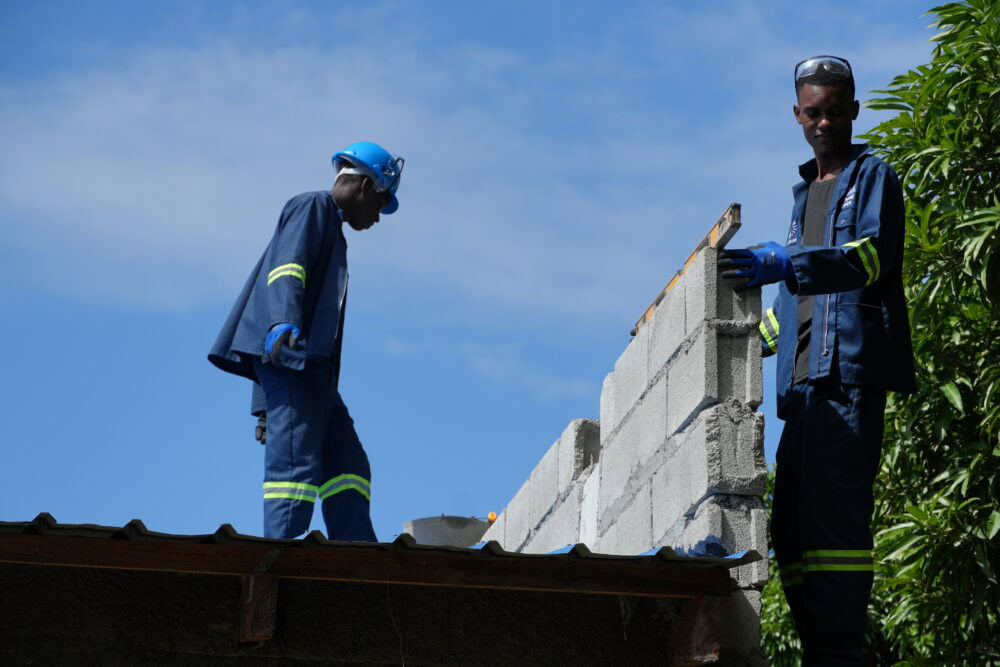
Several lessons emerge from Young Africa’s experience. First, localisation is most effective when programmes are designed around existing economic realities rather than imported assumptions. Second, local ownership matters. Communities are more likely to sustain initiatives when they play a role in shaping and implementing them. Finally, scale and localisation do not have to be competing goals. With sufficient flexibility, it is possible to expand successful models while remaining responsive to local contexts.
By 2035, Africa is expected to have the world’s largest working-age population, with more than one billion people of working age. Yet the ILO estimates that millions of young Africans remain outside education, employment, and training. Without stronger pathways to economic participation, this demographic dividend risks becoming a source of instability rather than growth. Recent global shocks, including the COVID-19 pandemic and supply chain disruptions linked to international conflicts like the war in Ukraine, have also exposed the risks associated with excessive dependence on external markets and production systems. These experiences have renewed interest in approaches that strengthen local enterprise, local production, and community resilience. Yet localisation does not mean rejecting scale. One of the central challenges facing development organisations is how to expand successful models without losing their connection to local realities. Young Africa’s experience suggests that scale and localisation do not have to be opposing forces if flexibility and community ownership remain central to implementation.
This tension between scale and local ownership sits at the heart of many development debates. Programmes that are too standardised risk losing relevance, while those that remain highly localised can struggle to expand their impact. The challenge is to build systems that can grow without losing sight of the communities they were designed to serve.
‘While our organisation is international and our model is already scalable across thirty organisations, we remain deeply grounded in serving disadvantaged communities in Africa. However far the model travels, its nature is for the active participants in the local economy,’ Goteka concludes.
Ultimately, localisation is not simply about where programmes are implemented. It is about who identifies opportunities, who shapes solutions, and who benefits from economic development. The experience of Young Africa suggests that lasting change is most likely when communities are not passive recipients of development, but active participants in creating it.