October 27, 2026
Rewiring TVETs for Africa’s Changing Labour Markets
As Africa moves towards a cleaner energy future, new forms of work are beginning to take shape across the continent. Solar technicians are being trained, young people are entering renewable energy value chains, and technical and vocational education and training institutions are being pushed to prepare learners for rapidly growing industries. Across Africa, solar systems are being installed, farms are adopting climate-smart practices, workshops are experimenting with repair and recycling, and businesses are exploring more sustainable ways of operating.
These shifts are creating new forms of work and generating demand for skills that did not exist in the same form a generation ago. For Africa, the opportunity is significant. According to Forecasting Green Jobs in Africa, a 2024 report by Financial Sector Deepening Africa and Shortlist, Africa’s green economy could generate 3.3 million jobs by 2030. Renewable energy is expected to account for about 70% of these opportunities, with solar power alone projected to create around 1.7 million jobs.
These projections matter because Africa’s labour market is already under an increasingly high pressure from a young and rapidly growing workforce. The continent has the youngest population in the world, with more than 400 million people aged between 15 and 35. This demographic reality can become an economic advantage if young people are equipped with skills that match where work is emerging.
The challenge extends beyond the green economy. As industries evolve, training systems must be able to respond to changing patterns of demand. Yet research from FSD Africa and Shortlist suggests that around 30% of green jobs will require certification or vocational training, making TVET an important pathway into emerging sectors and a useful lens for examining how skills systems adapt to labour market change. This is where Young Africa’s work becomes relevant. As a youth skills development organisation, Young Africa trains young people through vocational, entrepreneurial, and life-skills programmes designed to improve access to employment, self-employment, and income-generating opportunities. Its model offers a practical way to examine a wider challenge facing TVET systems across the continent: how training can keep pace with changing labour markets and connect young people to sectors where practical skills can become sustainable livelihoods.
The International Labour Organization’s Global Employment Trends for Youth 2024 notes that education does not automatically translate into better employment outcomes, particularly in economies that are not creating enough suitable jobs for young people with higher levels of training. In a conversation with Wellington Muchechetere, Grants Coordinator at Young Africa International, skills mismatch is one of the most persistent challenges he has observed across several countries where the organisation operates. ‘The mismatches have existed for years,’ he says, drawing on his experience working with Young Africa in Zimbabwe, Mozambique, Angola, Zambia, and now Nigeria. The issue he describes points to a wider weakness within parts of the TVET sector. Training institutions often continue to rely on static curricula, outdated infrastructure, and equipment that no longer reflect how industries operate. Learners are still completing training in trades with limited local demand, while growing sectors struggle to find people with the practical skills they need.
This gap between training systems and industry demand affects how young people move into work. A learner may leave with a certificate and technical knowledge, yet still struggle to translate that learning into stable employment, enterprise growth, or sustainable income. Success depends on more than course content alone. It is shaped by the quality of training equipment, access to mentorship, exposure to business environments, employer linkages, and the ability to navigate real market conditions. The World Bank notes that automation, climate action, digitalisation, and demographic shifts are reshaping the nature of work, requiring education and workforce systems to become more responsive to changing labour market needs.
This is why Young Africa approaches youth empowerment through a systems lens. Training is treated as one part of a wider ecosystem around the young person. Relevant curricula, practical learning spaces, entrepreneurship support, employer engagement, life skills, and market access all influence whether training translates into meaningful economic opportunities. This aligns with broader evidence from the ILO, which finds that youth employment programmes are generally more effective when skills training is combined with complementary support such as entrepreneurship development, soft skills, certification, and employment services. For Young Africa, market assessment is the starting point of programme design. Before introducing any programme, the organisation conducts market and needs assessments in the countries and communities where it operates.
The process involves engaging the private sector, local businesses, government stakeholders, and young people themselves. The process helps identify which skills are missing, where demand exists, and which forms of economic activity are viable within each context. These findings directly shape programme design. Training areas are selected based on local market conditions, business needs, and the realities of the communities where young people live and work. In this way, the economy surrounding the learner becomes an important driver of what is taught. The same market-driven logic also influences how training is delivered. One of Young Africa’s most distinctive features is its franchise business model, in which private entrepreneurs run businesses within training centres using the facilities and equipment on site. These businesses function as mini-industries, exposing students to production processes, customers, deadlines, and workplace standards.
‘We bring in franchisees who run actual businesses inside the training centres,’ Muchechetere explains. ‘Students are embedded directly into these businesses, working on active production lines rather than simulated workshop exercises.’
For Muchechetere, this approach addresses one of the major weaknesses within conventional TVET systems. Students encounter real working conditions while they are still training rather than only after graduation. ‘In many TVET systems, young people only meet real industry conditions after they finish training,’ he says. ‘By then, the gap is already too big.’ Students gain practical experience, businesses serve customers, and the centre becomes more closely connected to the local economy.
Franchisees contribute through usage fees and shared operational costs, while also providing technical supervision alongside instructors. This creates an environment where learning, production, and partial cost recovery occur within the same system. The significance extends beyond training quality alone. Vocational training centres can become vulnerable when they depend entirely on short-term project funding.
By embedding enterprise within the training environment, the franchise model helps sustain activity beyond individual project cycles while strengthening local economic systems.
In doing so, it shifts the focus from short-term programme delivery towards longer-term investment in skills, enterprise, and community resilience.


The same thinking extends to Young Africa’s mobile training model, which is designed for communities with limited infrastructure or restricted access to formal training. Here, too, the process begins with a local market assessment. Training is delivered in partnership with local artisans who already operate small businesses within their communities.
‘Just like in our fixed centres, we work with people who are already doing the trade,’ Muchechetere says. ‘Mechanics, tailors, welders—people who already have functioning businesses.’
Students divide their time between short theoretical sessions and extended hands-on training within these enterprises. By placing learning within existing economic activity, the model enables trainees to develop skills in environments where income is already being generated. In some cases, trainees are absorbed into the same businesses where they trained, easing the transition from learning to work.
Across both fixed and mobile models, Young Africa’s approach reflects a reality common across many African labour markets: pathways into work are rarely linear. Some young people enter wage employment, others move into self-employment, and many transition between both over time.
The ILO notes that self-employment and temporary work are often closely linked to informal employment, where income, working conditions, and social protections can be less secure. This is why technical training is combined with entrepreneurship, life skills, and post-training support.
Depending on programme design and funding cycles, graduates may receive startup kits, business development support, links to microfinance institutions, internships, or job placement assistance.
‘You cannot only train people for jobs that may not exist in sufficient numbers,’ Muchechetere notes. ‘So we also prepare them to create their own income.’
This approach becomes increasingly relevant as new sectors emerge. Areas such as solar installation, waste management, climate-smart agriculture, and resource efficiency are generating demand for practical skills. However, many of these industries in the countries where Young Africa operates are still developing.
The International Renewable Energy Agency (IRENA) and the ILO note that public policy, private sector investment, and civil society engagement all influence whether the growth of renewable energy translates into employment, local value creation, and broader economic benefits.
‘These are still emerging sectors in many of the countries and communities we work in,’ Muchechetere says. ‘We are taking baby steps.’
The implication is that training systems cannot focus only on current demand. They must also anticipate future opportunities. This is the space in which Young Africa’s Greenovating TVET initiative operates. It integrates green skills into vocational training while maintaining the same market-responsive approach that underpins the organisation’s broader model.
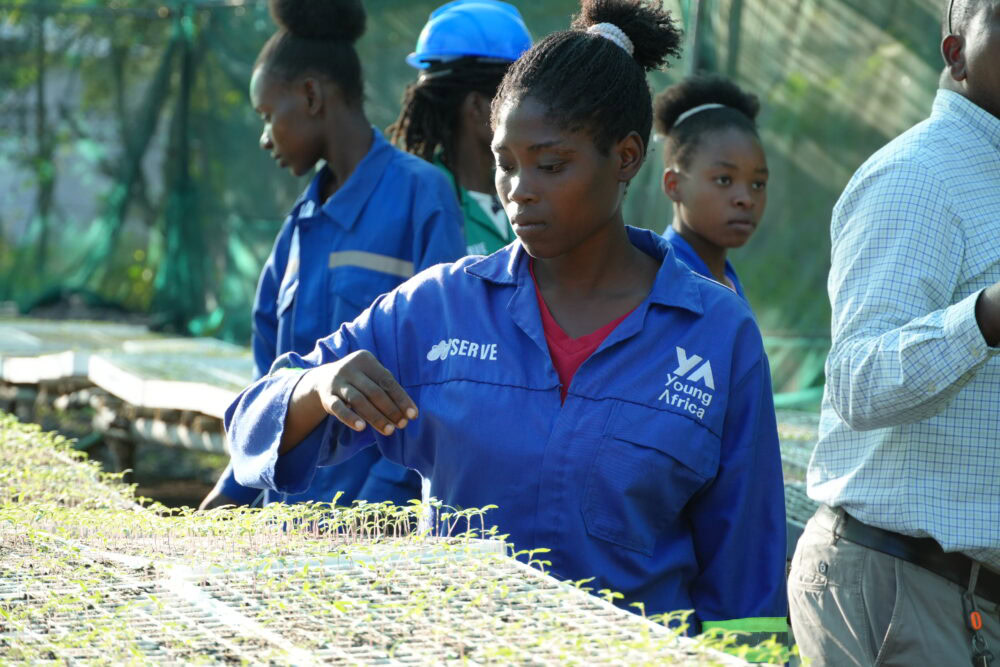
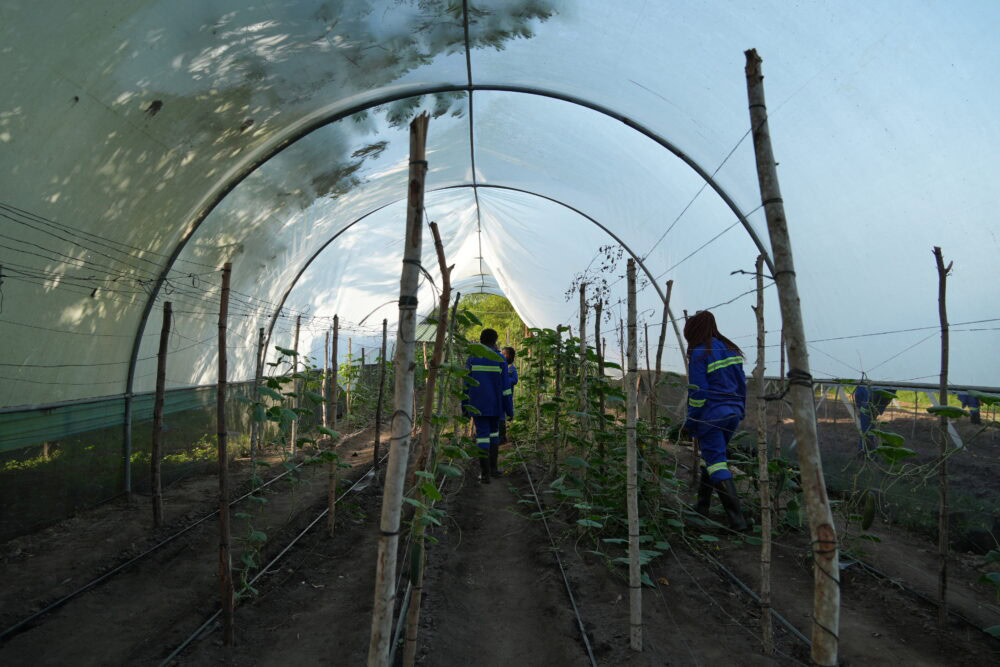
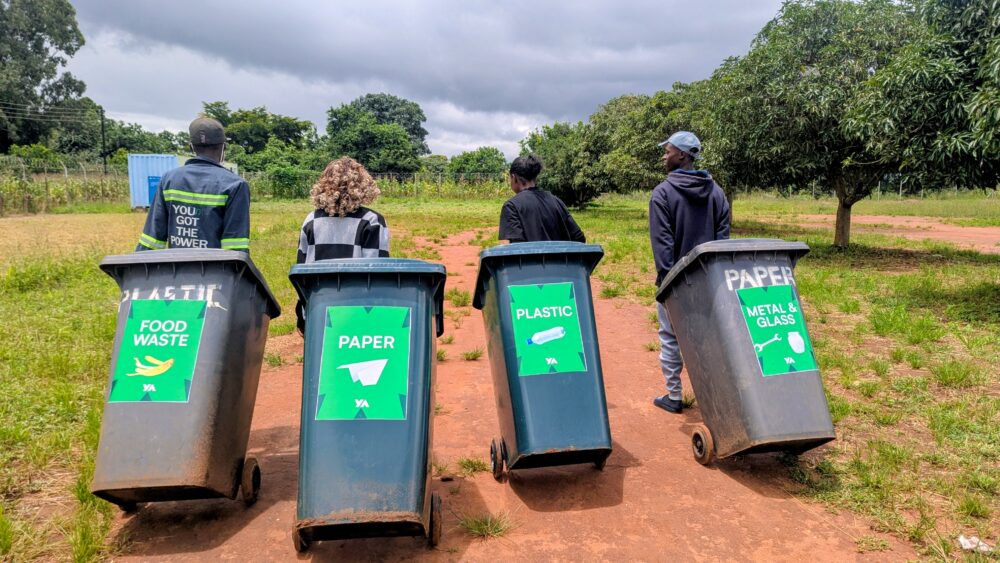
At its core, the initiative focuses on practical skills in areas such as renewable energy, sustainable agriculture, waste management, and resource efficiency. These sectors are increasingly associated with future job creation, yet in many communities, they remain unfamiliar.
Training systems, therefore, face a dual task: preparing young people for industries that are expected to grow while helping communities understand how those skills can translate into livelihoods today.
In Zimbabwe, where Young Africa’s headquarters is based in Harare, the Greenovating TVET programme became a practical test of how green skills can be introduced in communities where the language of the green economy is still relatively new.
Over the past two years, Young Africa has implemented the project, funded by Nationale Postcode Loterij, as part of a broader effort to align vocational training with both current and emerging labour market opportunities.
For Faith Ncube, Project Manager of the Greenovating TVET programme, industry relevance was the starting point. Green skills need to be connected to real demand, appropriate equipment, and the practical conditions young people would encounter after training.
‘We work very closely with the private sector,’ she explains. ‘We conduct regular engagements to ensure our training aligns with what is happening in the industry.’
This connection is particularly important as economies transition towards more sustainable forms of production and consumption.
The International Labour Organization estimates that a greener economy could create 24 million new jobs globally by 2030 if the right policies are in place. At the same time, the organisation warns that workers who are not prepared for environmental and economic change risk being left behind.
For Young Africa, vocational training serves as a practical bridge between policy ambitions and local employment opportunities. Students spend six months in training before completing at least four months of workplace attachment, allowing them to apply technical skills in real working environments.
Industry engagement extends beyond workplace placements. According to Ncube, employers and industry experts are involved in curriculum reviews to help ensure training remains relevant to evolving labour market needs.
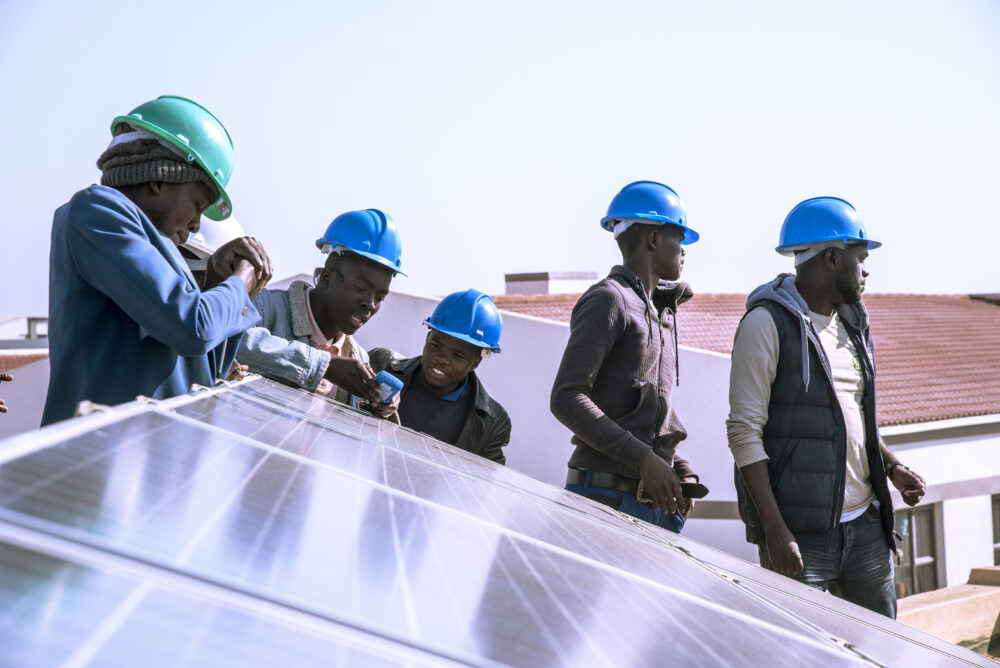
Within the Greenovating TVET initiative, this approach has been applied to areas such as solar energy, sustainable agriculture, and waste management. While these sectors are increasingly associated with future job creation, awareness of the opportunities they present remains limited in many communities.
‘Even in the communities where these young people come from, there was limited awareness,’ Ncube notes. As a result, the project had to do more than introduce new technical competencies.
It also needed to build understanding around how green skills could translate into livelihoods. In communities where economic survival remains the immediate priority, environmental sustainability becomes meaningful when it is connected to income generation and employment opportunities.
A clear example was the solar technology programme, which trained young people to install and maintain solar systems for households, farms, and small enterprises.
‘Previously, parents and caregivers were sceptical,’ Ncube explains. ‘They would ask about employment prospects because there was limited awareness of green skills and the opportunities available.’
To address this, awareness sessions were integrated into community outreach and induction activities. Young people and their families were introduced to the economic potential of solar energy and other green sectors, helping connect environmental sustainability to practical livelihood opportunities.
‘With young people, the moment you explain the income potential, it becomes attractive,’ she says. ‘They want opportunities that generate income.’
This highlights a broader lesson for labour-market-responsive training systems. Emerging sectors cannot be treated only as future opportunities. They must also be linked to present-day economic realities. Preparing young people for tomorrow’s jobs requires demonstrating how those skills can create value today.
Ncube is careful not to overstate progress. She describes the work as gradual, shaped by continuous awareness-building, industry engagement, and learning from implementation.
‘We are still in a process,’ she adds. ‘Through continuous awareness, we hope communities will become more conversant with green skills development and how they contribute to a shared future.’
To support implementation, Young Africa brought in a dedicated green-skills expert and worked with national institutions, including the Environmental Management Agency and the Ministry of Environment, through its Climate Change Management Department.
These partnerships helped align the programme with national environmental priorities while keeping implementation grounded in vocational training realities.
At a regional level, the project also generated lessons for replication across the Young Africa federation. As part of the Nationale Postcode Loterij initiative, lessons from the pilot phase were documented and shared to inform implementation in other country contexts.
‘As part of the Nationale Postcode Loterij project, we had to harvest lessons from the pilot phase so they could be replicated,’ Ncube says. ‘Young Africa Mozambique is now implementing something along the lines of greening.’
Looking ahead, Ncube sees renewable energy, sustainable production, and environmental management as areas of growing employment potential, even as adoption remains gradual.
‘We are moving towards renewable energy,’ she says. ‘There is great potential there to help reduce youth unemployment, while strengthening local economies.’
For Ncube, the Greenovating TVET initiative reflects a broader shift happening within vocational education. Training systems can no longer focus only on preparing learners for jobs that exist today. They must also anticipate emerging sectors, adapt to changing labour market demands, and equip young people with skills that remain relevant as economies evolve.
‘It is still a work in progress,’ she says. ‘But it is about preparing young people for what is coming, not just what already exists.’